Understanding the Liquidity and Resale Value of Physical Gold
What is Gold Liquidity?
Liquidity refers to the ease and speed with which an asset can be converted into cash without significantly affecting its market price. In the world of precious metals, gold is considered one of the most liquid assets on the planet. Unlike real estate, which can take months to sell, or private equity, which may have multi-year lock-up periods, physical gold can often be liquidated within minutes or hours.
However, "liquidity" isn't just about speed; it's also about price efficiency. True liquidity means you can sell your gold at a price that is very close to the current global spot price. For individual investors holding physical bullion, liquidity depends heavily on the form of gold held, its purity, and the reputation of the mint that produced it.
Factors Influencing Resale Value
When you decide to sell your physical gold, the price you receive—the resale value—is influenced by several critical factors beyond just the daily spot price.
- Purity and Weight: Most investment-grade gold is .999 or .9999 fine. Buyers will verify the weight and purity using non-destructive testing methods like XRF scanners or Sigma Metalytics sensors.
- Condition: While gold is a soft metal, "bullion" is generally valued for its metal content. However, significant damage, scratches, or "milk spots" on sovereign coins can sometimes lead to a lower offer from picky collectors or dealers.
- Brand/Mint Reputation: Gold produced by world-renowned mints (like the U.S. Mint, Royal Canadian Mint, or Perth Mint) often carries a higher resale value because these items are universally recognized and trusted.
- Current Market Demand: If there is a "run on gold" and dealers are short on inventory, you may actually receive a price above spot. Conversely, in a quiet market, you may receive slightly below spot.
Understanding Bid-Ask Spreads
To navigate the resale market effectively, you must understand the "Spread." The "Ask" is the price at which a dealer sells gold to you. The "Bid" is the price at which the dealer buys gold back from you. The difference between these two numbers is the dealer's profit margin and covers their overhead.
For highly liquid items like 1 oz Gold Eagles, the spread is typically narrow (2-5%). For smaller items like 1/10 oz coins, the spread is often much wider because the manufacturing and handling costs are higher relative to the amount of gold. To maximize resale value, investors often prefer 1 oz units, as they offer the best balance between liquidity and narrow spreads.
The Most Marketable Forms of Gold
Not all gold is created equal when it comes time to sell. If liquidity is your primary concern, focus on these forms:
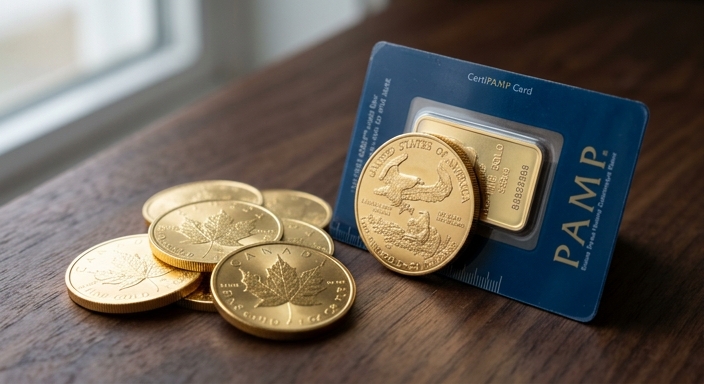
1. Government-Issued Coins: These are legal tender and have standardized weights and purities guaranteed by a sovereign nation. Examples include the American Gold Eagle, Canadian Gold Maple Leaf, and South African Krugerrand. These are recognized globally and can be sold at almost any coin shop or bullion dealer in the world.
2. LBMA-Approved Bars: Gold bars from refineries like PAMP Suisse, Valcambi, or Royal Canadian Mint that come in "Assay" cards are highly liquid. The assay card acts as a certificate of authenticity, making the testing process faster for the buyer.
3. Junk Gold/Fractional: While 1 oz is the standard, 1/4 oz and 1/10 oz coins are also very liquid but often carry higher premiums. They are excellent for "barter" scenarios but may yield a slightly lower percentage of your initial investment upon resale due to those high entry premiums.
Where to Sell Your Gold for Top Dollar
Where you sell your gold determines how much of the "spot" price you actually keep. You generally have three main options:
- Local Coin Shops (LCS): Pros: Instant cash, no shipping risks, personal relationship. Cons: May offer slightly lower prices than national dealers due to higher local overhead.
- Online Bullion Dealers: Pros: Often offer the most competitive "buy-back" prices and can handle large volumes. Cons: You must ship the gold (insured) and wait a few days for payment.
- Private Sales: Pros: You can often sell at the mid-point between bid and ask, benefiting both you and the buyer. Cons: Significant safety and fraud risks. Always meet in a secure, public location like a police station lobby.
Pro Tips for Maximizing Your Returns
To ensure you get the most money when selling, follow these best practices:
Keep it in the original packaging: If your gold bar came in a plastic assay card, do not remove it. Breaking the seal can immediately reduce the resale value by $20-$50 as the dealer will then have to treat it as "raw" gold and spend more time verifying it.
Check the "Buy-Back" prices online: Major dealers like APMEX or JM Bullion often list their live buy-back prices on their websites. Use these as a benchmark before walking into a local shop so you know if you are getting a fair offer.
Timing is everything: Avoid selling during "market panics" if you are a buyer, but if you are a seller, high-volatility periods often see dealers paying premiums over spot price just to get inventory. Monitor the "Premium over Spot" trends, not just the spot price itself.
Frequently Asked Questions
In the United States, gold is treated as a "collectible" for capital gains tax purposes. If you sell it for more than you paid, you may owe capital gains tax. Dealers are also required to report certain large transactions to the IRS via Form 1099-B, though the thresholds vary by the type of coin or bar sold.
Yes. Most reputable dealers will buy any authentic gold bullion regardless of where it was originally purchased. However, they may offer a slightly better rate to existing customers as a loyalty incentive.
No. Jewelry is generally less liquid and has a lower resale value relative to the spot price. This is because jewelry includes costs for craftsmanship and retail markup that are not recovered when selling for the scrap gold value.