I may earn a commission at no extra cost to you. #ad
7 Reasons Why Physical Gold Is the Ultimate Inflation Hedge
Jump to Section
In an era of unprecedented government spending and central bank intervention, the specter of inflation looms larger than ever. For decades, savvy investors have turned to one specific asset to protect their purchasing power: physical gold. Unlike paper assets or digital currencies, gold has stood the test of time for millennia.
Understanding why gold serves as the ultimate hedge requires looking beyond daily price fluctuations and focusing on the fundamental economic principles that govern wealth preservation. Below, we explore the seven critical reasons why physical gold remains the gold standard for inflation protection.
1. Preservation of Intrinsic Value
The primary reason gold is an effective inflation hedge is its intrinsic value. Unlike fiat currency (paper money), which is not backed by a physical commodity, gold is a tangible asset with utility. It requires significant labor, energy, and resources to extract from the earth.
Throughout history, the purchasing power of gold has remained remarkably stable. For example, an ounce of gold bought a high-quality suit in the 1920s, and today, that same ounce of gold still buys a high-quality suit. In contrast, the US dollar has lost over 95% of its purchasing power since the creation of the Federal Reserve in 1913.
2. Protection Against Currency Devaluation
Gold and the US dollar typically share an inverse relationship. When the value of the dollar declines relative to other currencies or goods—a hallmark of inflation—the price of gold usually rises. Because gold is priced in dollars globally, a weaker dollar makes gold cheaper for investors using other currencies, driving up demand and price.
When central banks "print" money through quantitative easing, they increase the total supply of currency. As more dollars chase the same amount of goods and services, prices rise. Gold cannot be printed, making it the natural "short" against the world's failing paper currencies.
3. Finite Supply and Scarcity
One of the most compelling arguments for gold is its limited supply. All the gold ever mined in human history would fit into approximately 4.5 Olympic-sized swimming pools. The annual mining production adds only about 1% to 2% to the total existing stock each year.
This scarcity contrasts sharply with modern monetary policy. Governments can—and do—increase the money supply by trillions of dollars at the stroke of a keyboard. Because gold cannot be manufactured or synthetically reproduced in a lab at scale, it acts as a permanent constraint on the erosion of value.
4. Elimination of Counterparty Risk
Physical gold is one of the few financial assets that is not someone else's liability. If you hold a stock, you depend on the company's management. If you hold a bond, you depend on the issuer's ability to repay. Even a bank deposit depends on the solvency of the banking institution.
Physical gold held in your possession (or in a secure, allocated vault) carries no counterparty risk. Its value does not depend on a contract, a promise, or the health of the financial system. During periods of high inflation or economic crisis, the "trust" in financial institutions often wavers, leading investors to flee toward the "trustless" security of physical gold.
5. Proven Historical Performance
History is littered with the corpses of dead currencies, from the Roman Denarius to the German Papiermark. In every instance of hyperinflation or severe currency debasement, gold has not only preserved wealth but often increased it in real terms.
During the stagflation of the 1970s, where the United States saw high unemployment and double-digit inflation, gold prices skyrocketed from $35 an ounce to over $800. For those looking for a "battle-tested" asset, gold is the only one with a 5,000-year track record of success.
6. Global Liquidity and Portability
In times of crisis, you need assets that can be quickly converted into any currency or used as a medium of exchange. Gold is one of the most liquid assets in the world. Whether you are in New York, Tokyo, or London, gold is recognized and valued instantly.
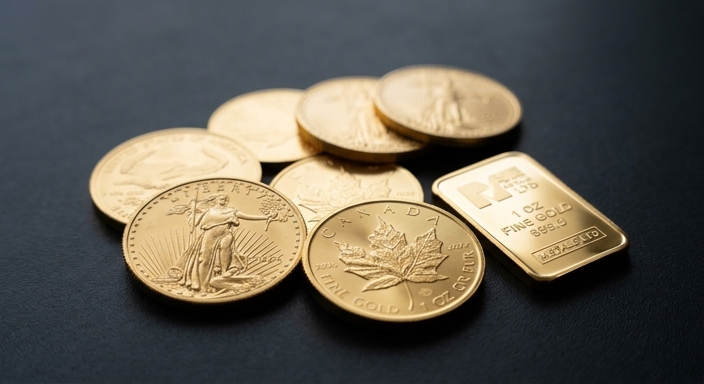
Modern gold bullion coins and small bars are also highly portable. You can carry a significant amount of wealth in a small pocket or pouch. This "portable wealth" provides a level of security and flexibility that real estate or large-scale machinery cannot offer during periods of economic instability.
7. Portfolio Diversification
Finally, gold serves as the ultimate diversifier. Modern Portfolio Theory suggests that a healthy portfolio should contain assets with low or negative correlation to each other. When traditional markets (stocks and bonds) are crashing due to inflationary pressures or rising interest rates, gold often moves in the opposite direction.
By adding physical gold to your holdings, you lower the overall volatility of your wealth. It acts as an insurance policy—you hope you never "need" it to skyrocket because that would imply a failing economy, but you are grateful it is there to balance out the losses in your paper assets.
Frequently Asked Questions
No, gold does not pay dividends or interest. Its value is derived entirely from its scarcity and intrinsic properties. While it doesn't provide yield, it also doesn't carry the risk of a company cutting a dividend or a government defaulting on interest payments.
While Bitcoin is often called "digital gold," it lacks the 5,000-year history and physical tangibility of gold. Gold's volatility is significantly lower than Bitcoin's, making it a more stable store of value for those prioritizing capital preservation.
For most individual investors, low-premium bullion coins (like the Gold Sovereign or Krugerrand) or small bars are the most efficient way to acquire gold. These are easy to store, easy to verify, and highly liquid.